We are processing your request.
Please, don’t close or refresh the page.
Galleries inside the Art Institute of Chicago

Nighthawks by Edward Hopper at the Art Institute

Four figures in an all-night diner, finished in January 1942 and bought by the Art Institute a few months later. What to look for in the painting, how it reached Chicago and where it hangs today.

Nighthawks is one of the most recognisable American images of the 20th century, and it has belonged to the Art Institute of Chicago almost from the day it was finished. Edward Hopper completed the painting on 21 January 1942 and the museum bought it that May, so it has never lived anywhere else. This guide explains how the picture came to Chicago, what to look for when you stand in front of it, where the famous diner was (and was not), and how to fit it into a visit to the museum. For transport, timings and the rest of the collection, see our Art Institute of Chicago visitor guide.

The Art Institute of Chicago: Fast Pass

Highlights

Skip the standard ticket lines upon arrival.

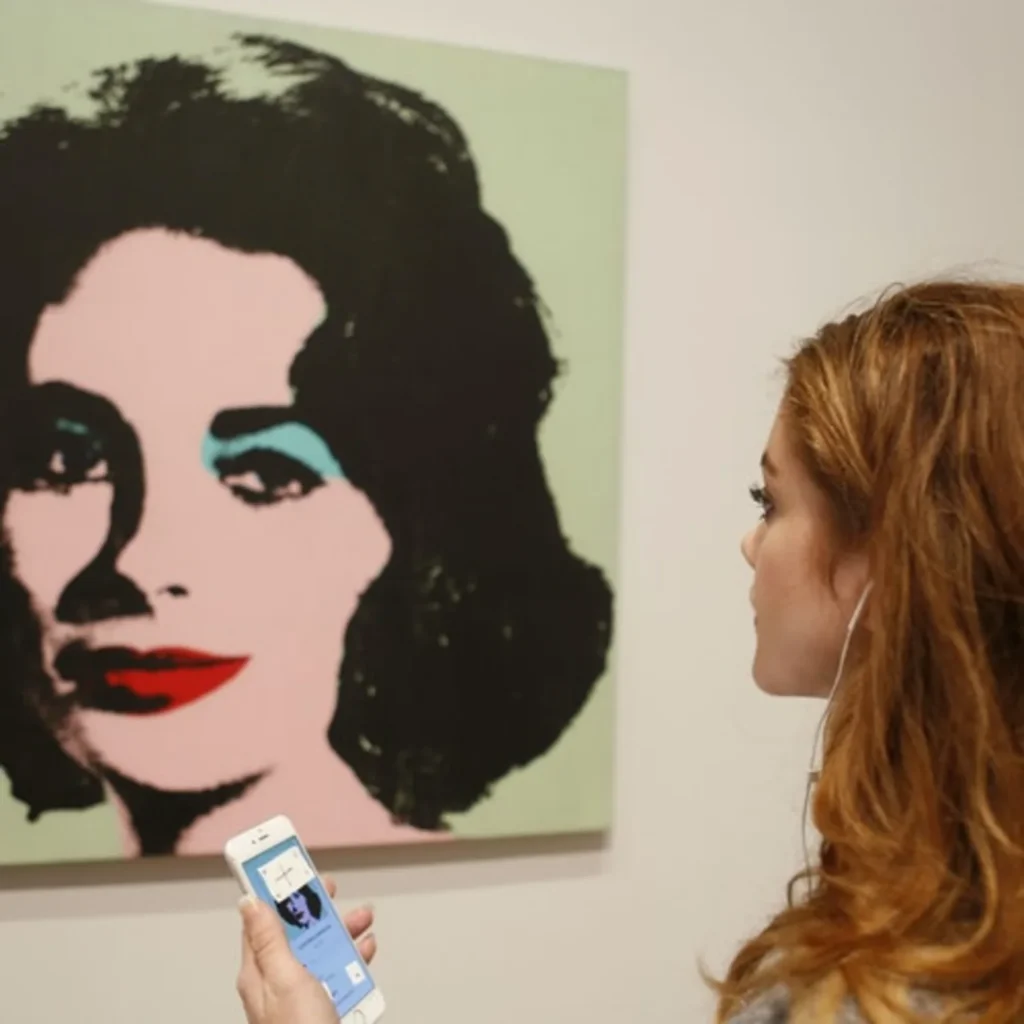
View masterpieces by artists like Picasso, Monet, and Warhol.

Explore all museum galleries and non-ticketed exhibits.

Attend complimentary daily tours offered in English and Spanish.

Use a free audio guide app available in multiple languages for enhanced engagement.
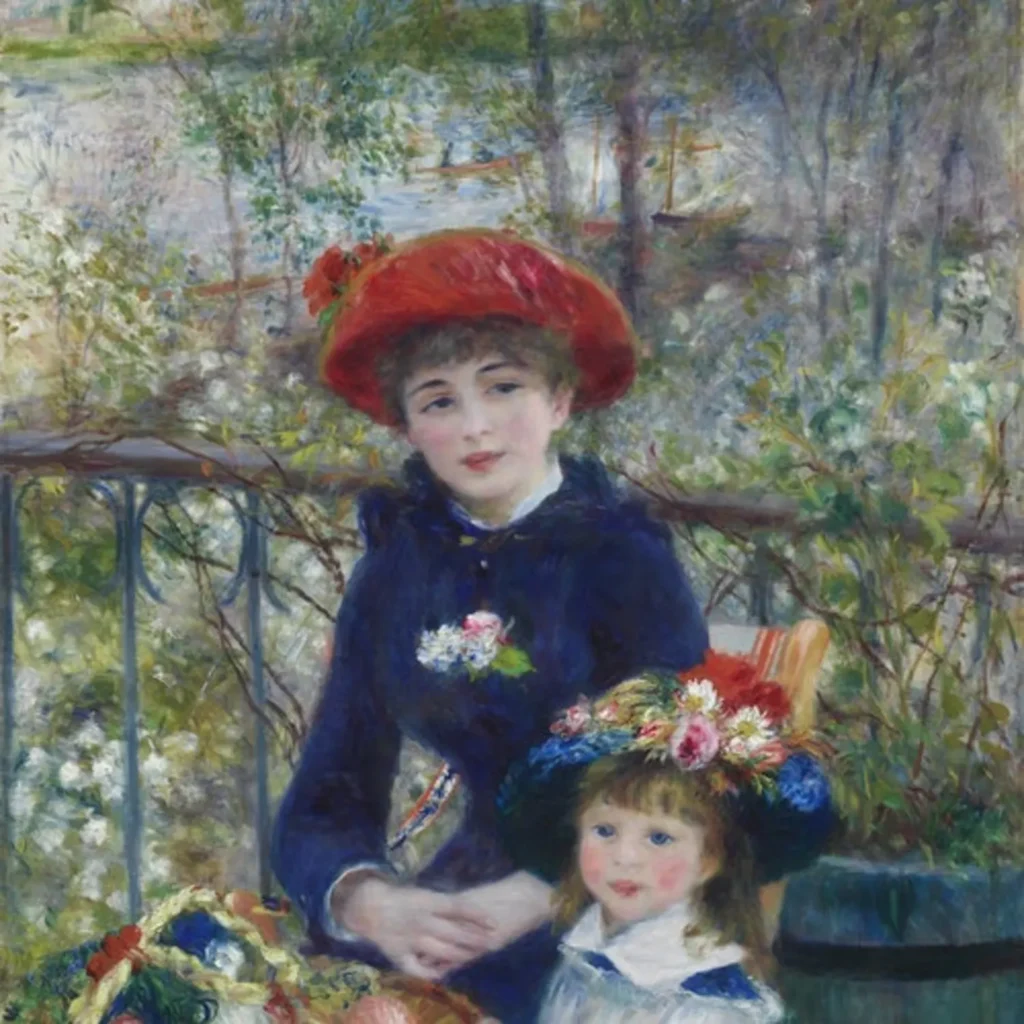
The Art Institute of Chicago: Skip-The-Line & Semi-Private Tour

Highlights

Avoid waiting in long lines with skip-the-line access.

Experience an intimate semi-private tour lasting approximately 2 to 2.5 hours.

Receive expert insights from a licensed guide knowledgeable about the museum’s collections.

Discover masterpieces from renowned artists like Monet, Dalí, Warhol, and Van Gogh.

Explore both well-known artworks and hidden treasures in this world-class museum.
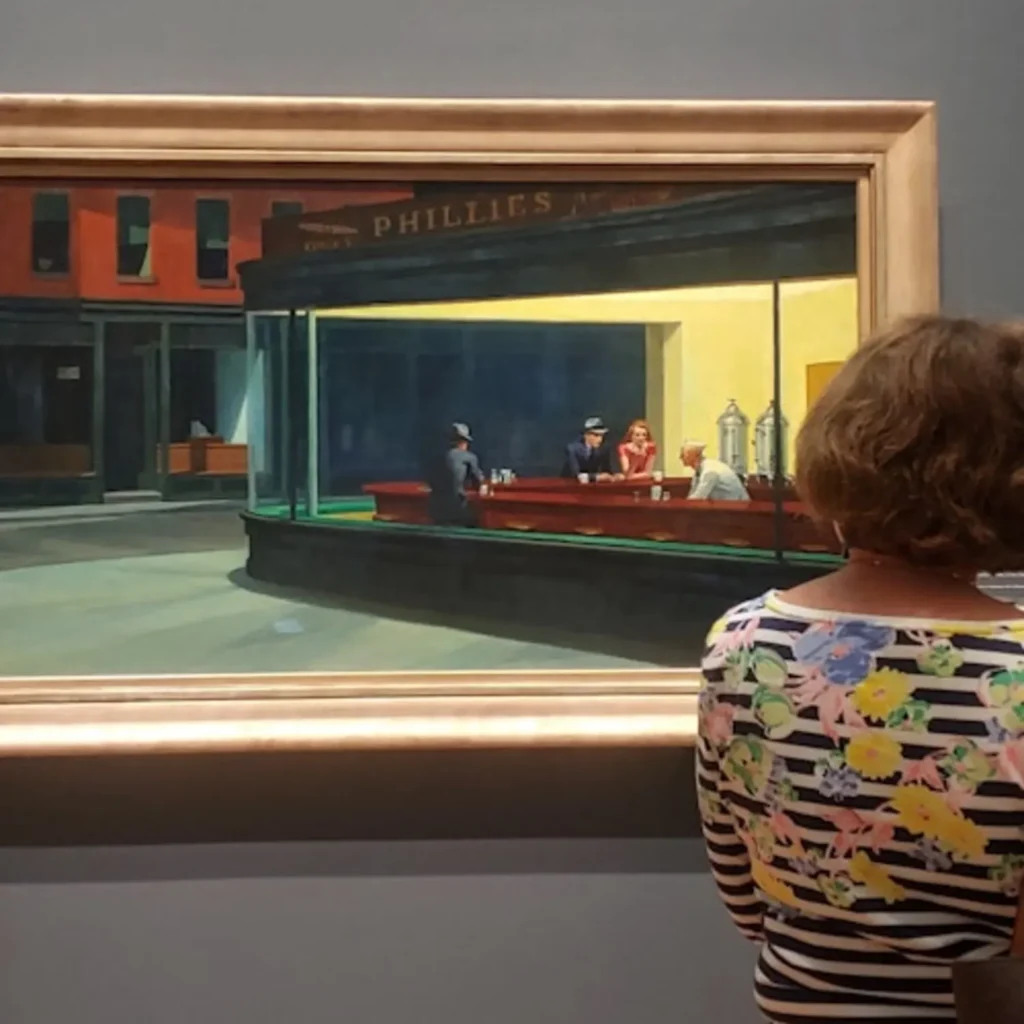
Nighthawks: key facts

Painted by Edward Hopper (1882 to 1967); his journal records it as finished on 21 January 1942.

Oil on canvas, 84.1 by 152.4 cm (33 1/8 by 60 inches).

Bought by the Art Institute on 13 May 1942 for $3,000, as part of the Friends of American Art Collection.

On view in Gallery 262, beside Grant Wood's American Gothic in Gallery 263.

Hopper's intended title was Night Hawks, two words, as written in his journal.

Hopper said the scene was suggested by a restaurant on Greenwich Avenue in New York, where two streets meet.

The painting travelled to the 1952 Venice Biennale and to Tate Modern in London in 2004.

How Nighthawks came to Chicago

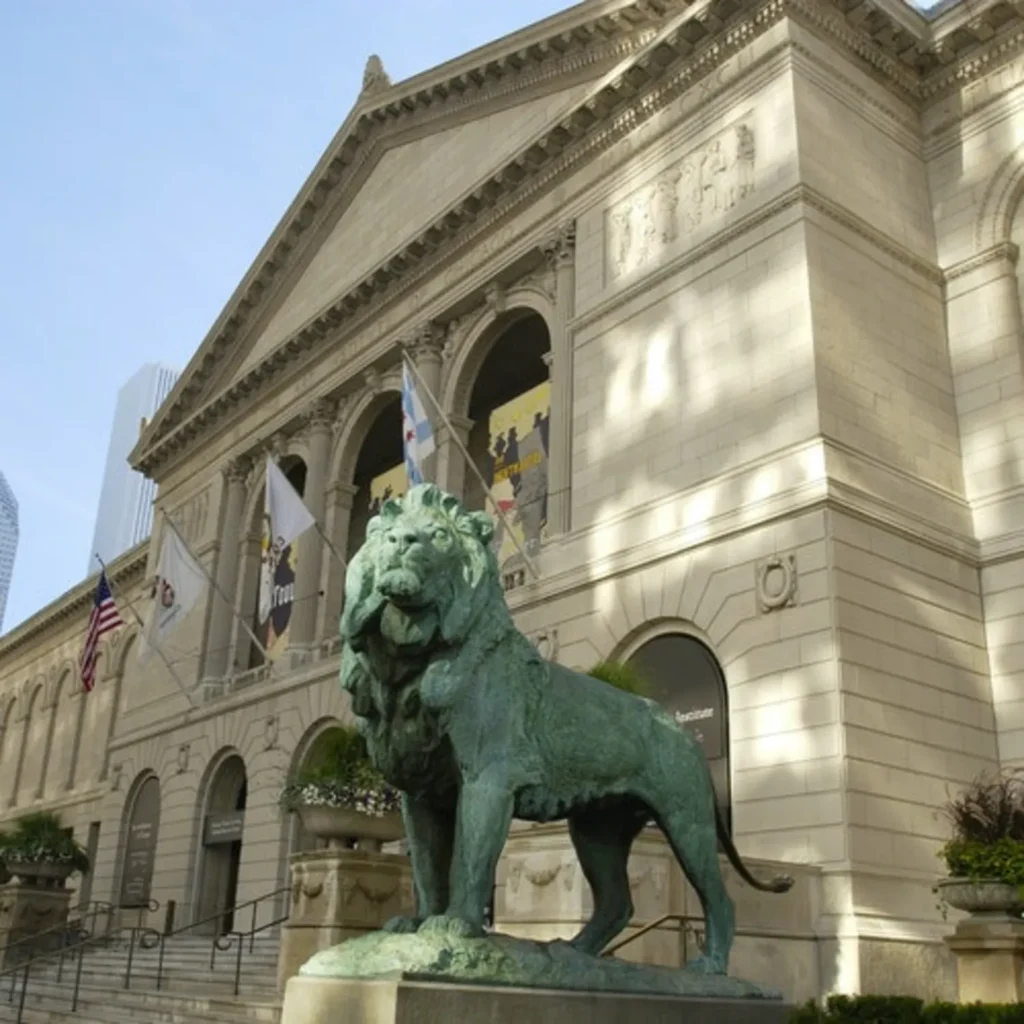
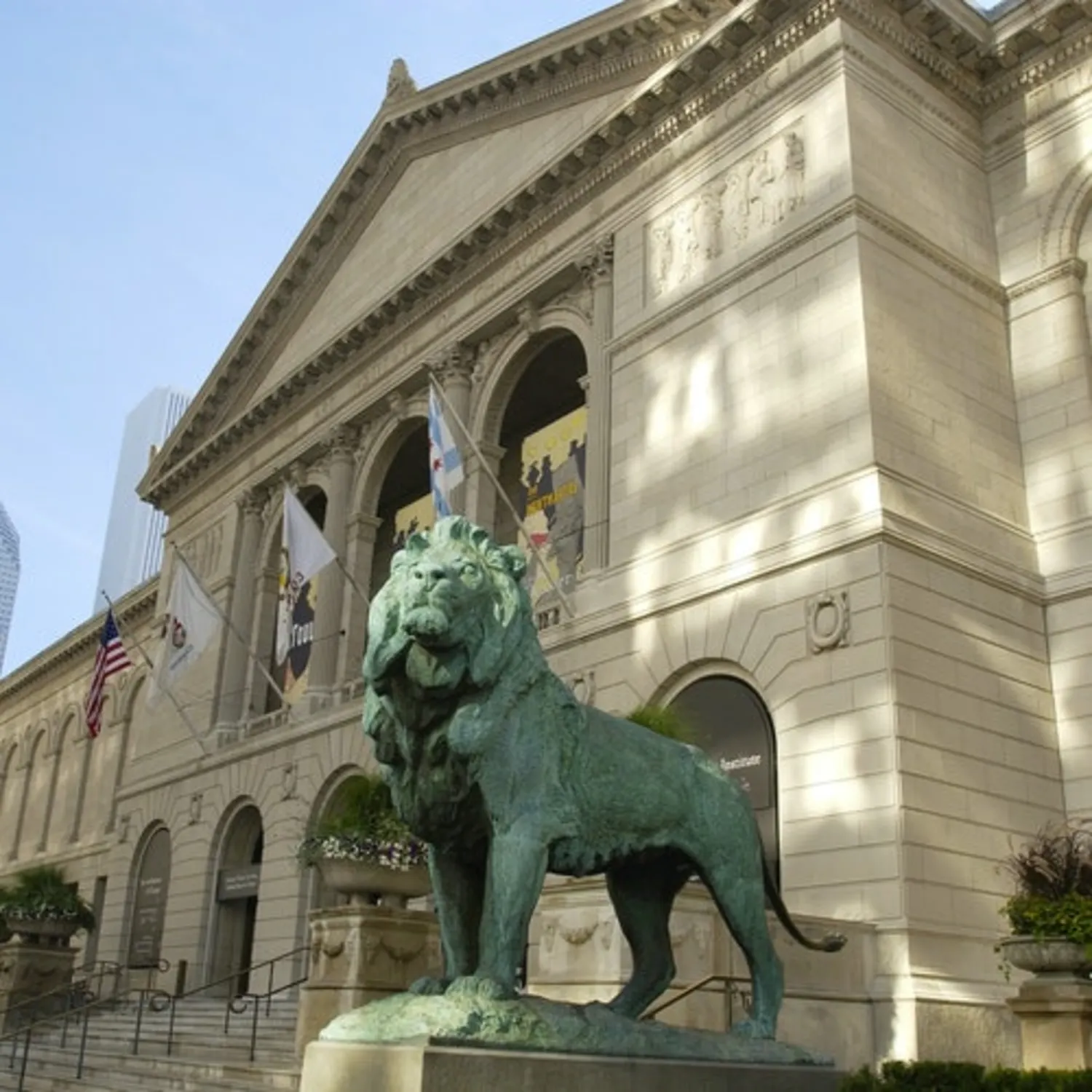
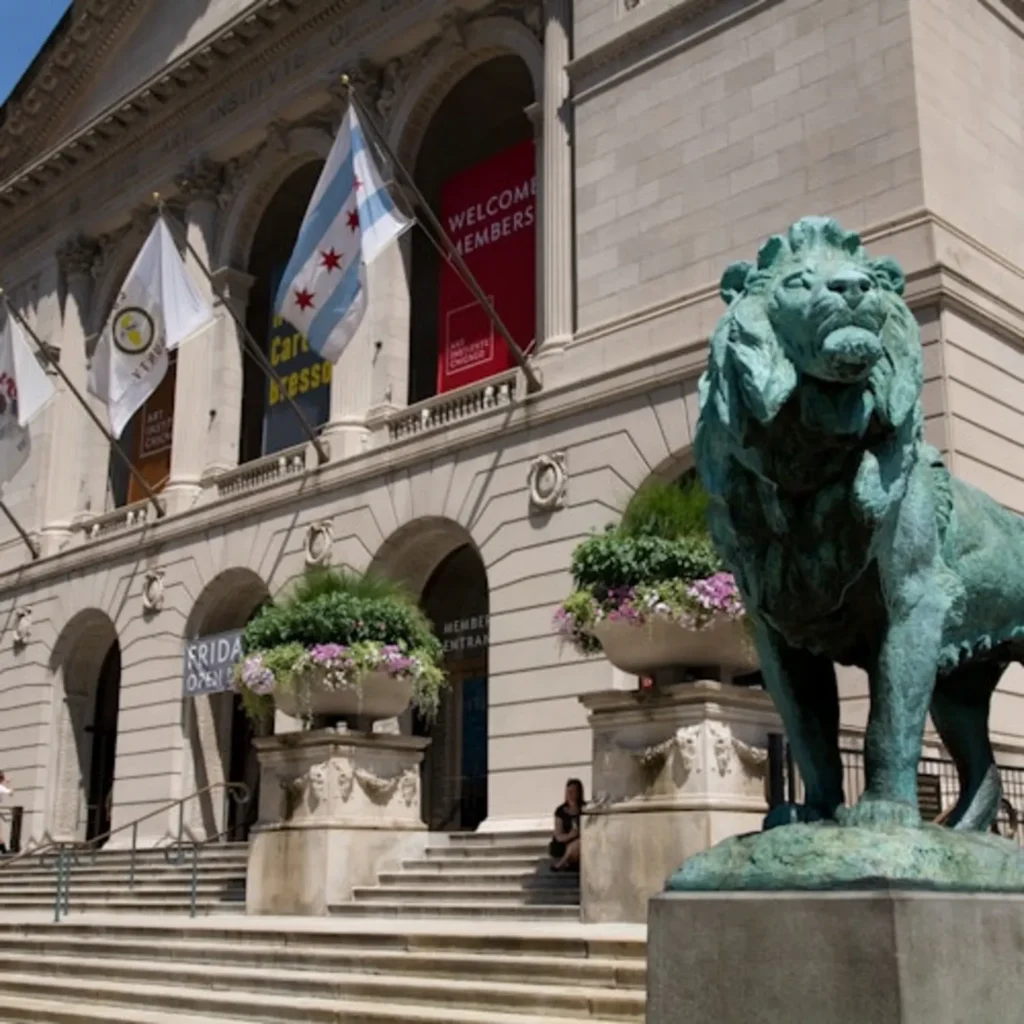
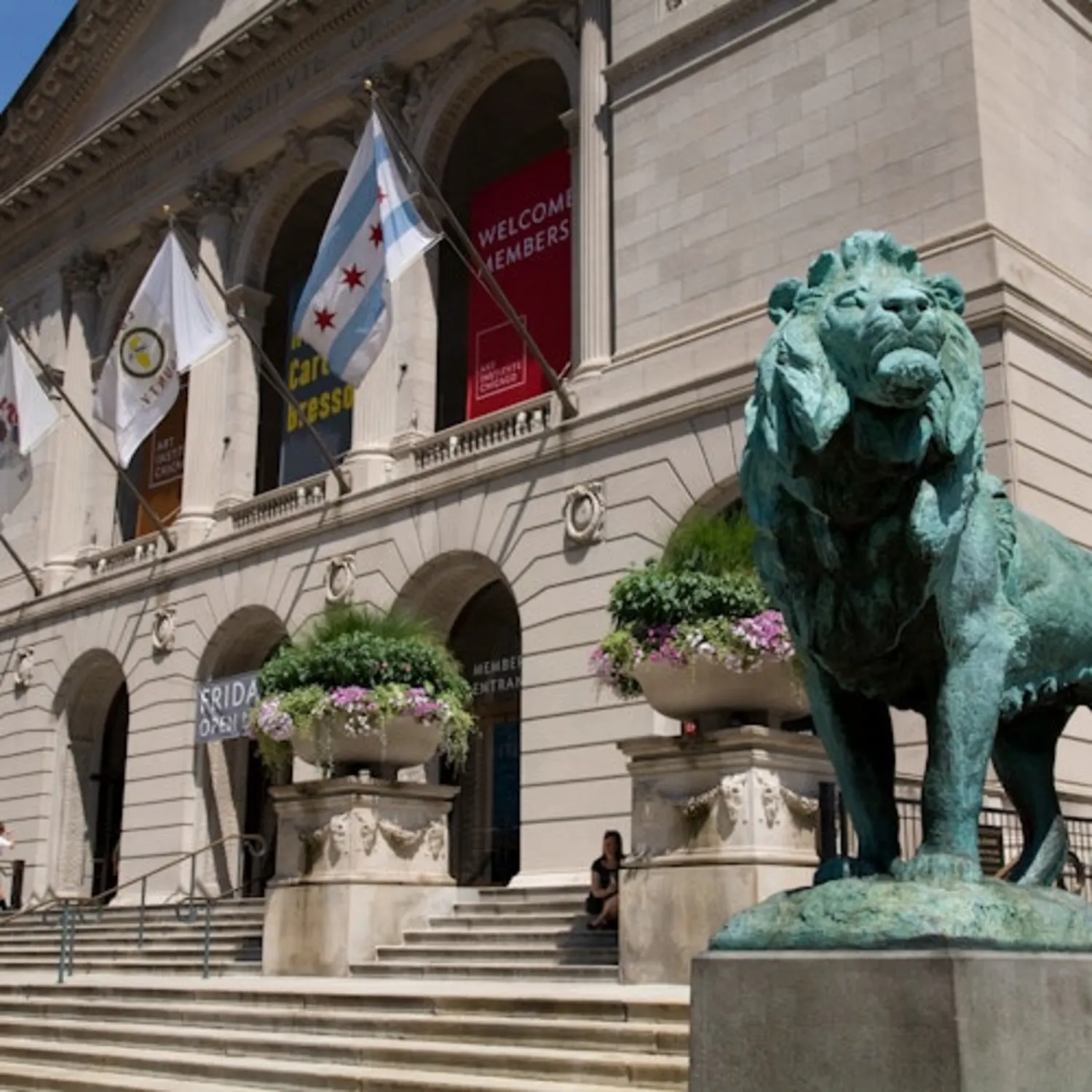
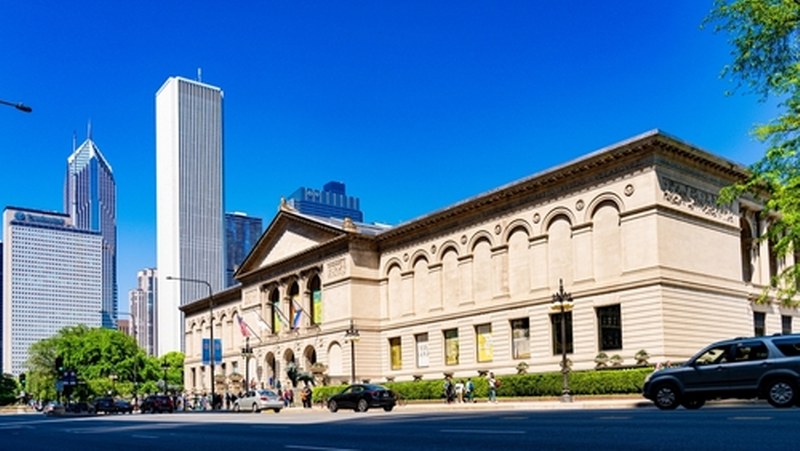
Art Institute of Chicago building on Michigan Avenue

After Hopper finished the painting in January 1942, it went on show at the Rehn gallery in New York, his dealer, for about a month. Daniel Catton Rich, director of the Art Institute of Chicago, saw it there and arranged the purchase. The sale went through on 13 May 1942 for $3,000, and the painting entered the museum's Friends of American Art Collection.

Hopper was delighted. In a letter to Rich that May he wrote that he was very pleased the museum liked the picture enough to acquire it, and he described it as among the very best things he had painted. The quick purchase fits a long habit of the Art Institute, which since its early years has made a point of buying art made in its own time. The painting was also shown at the museum's annual exhibition the same year.

What to look for in the painting

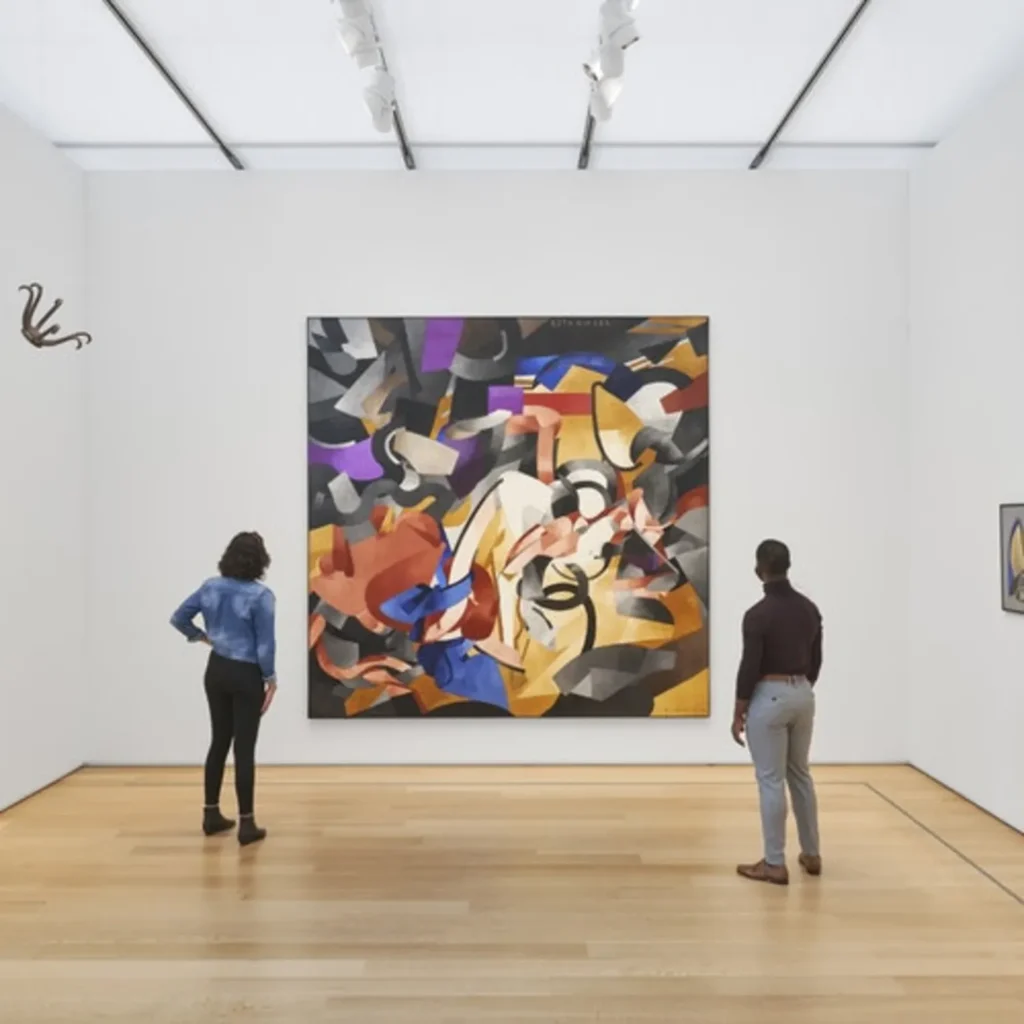
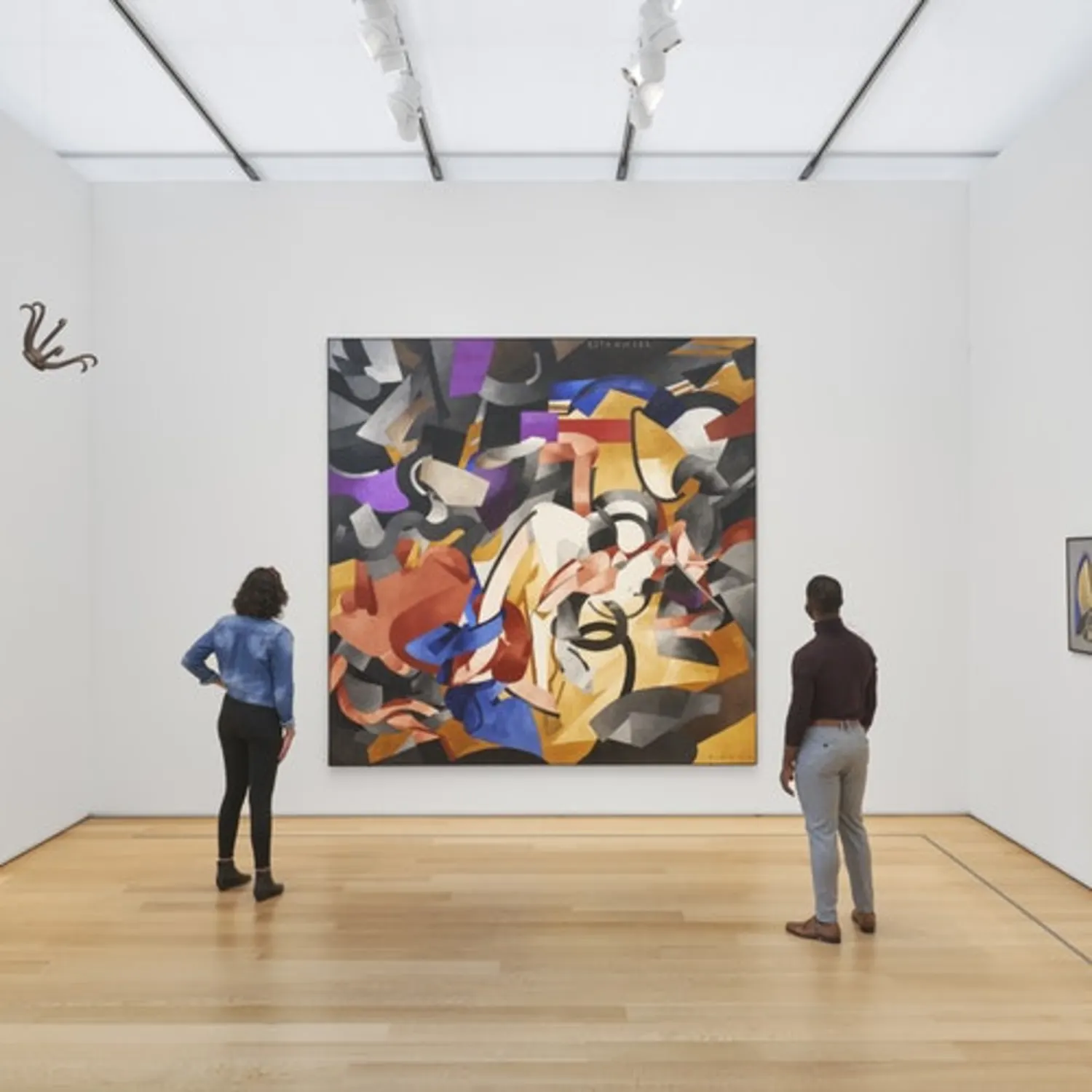
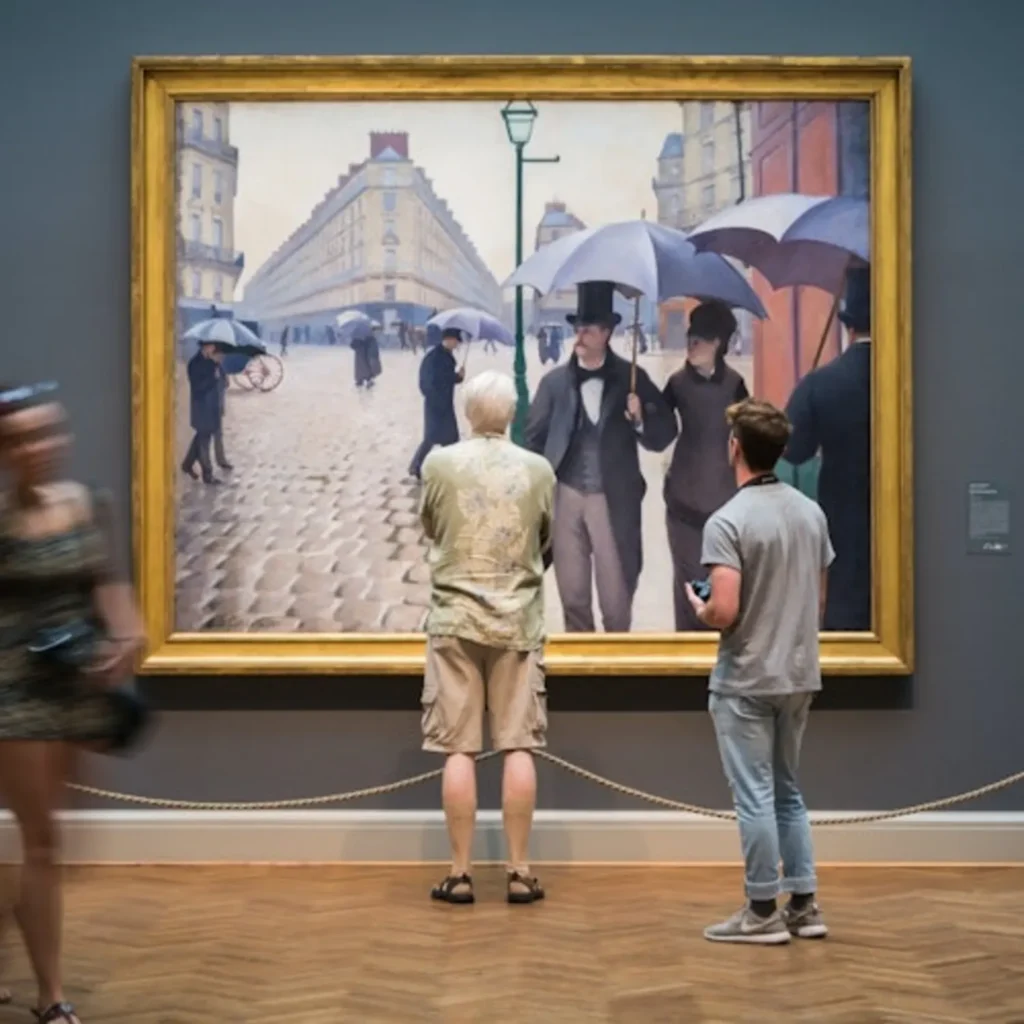
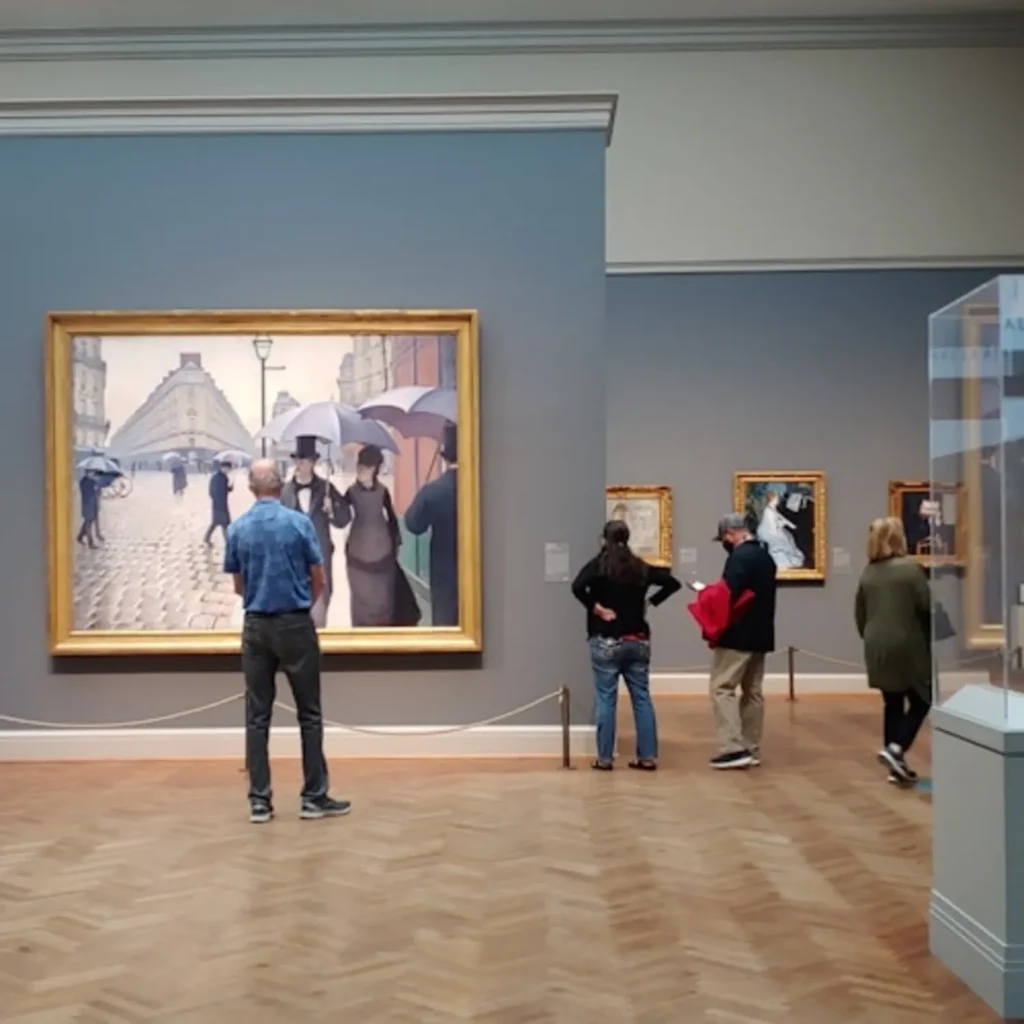
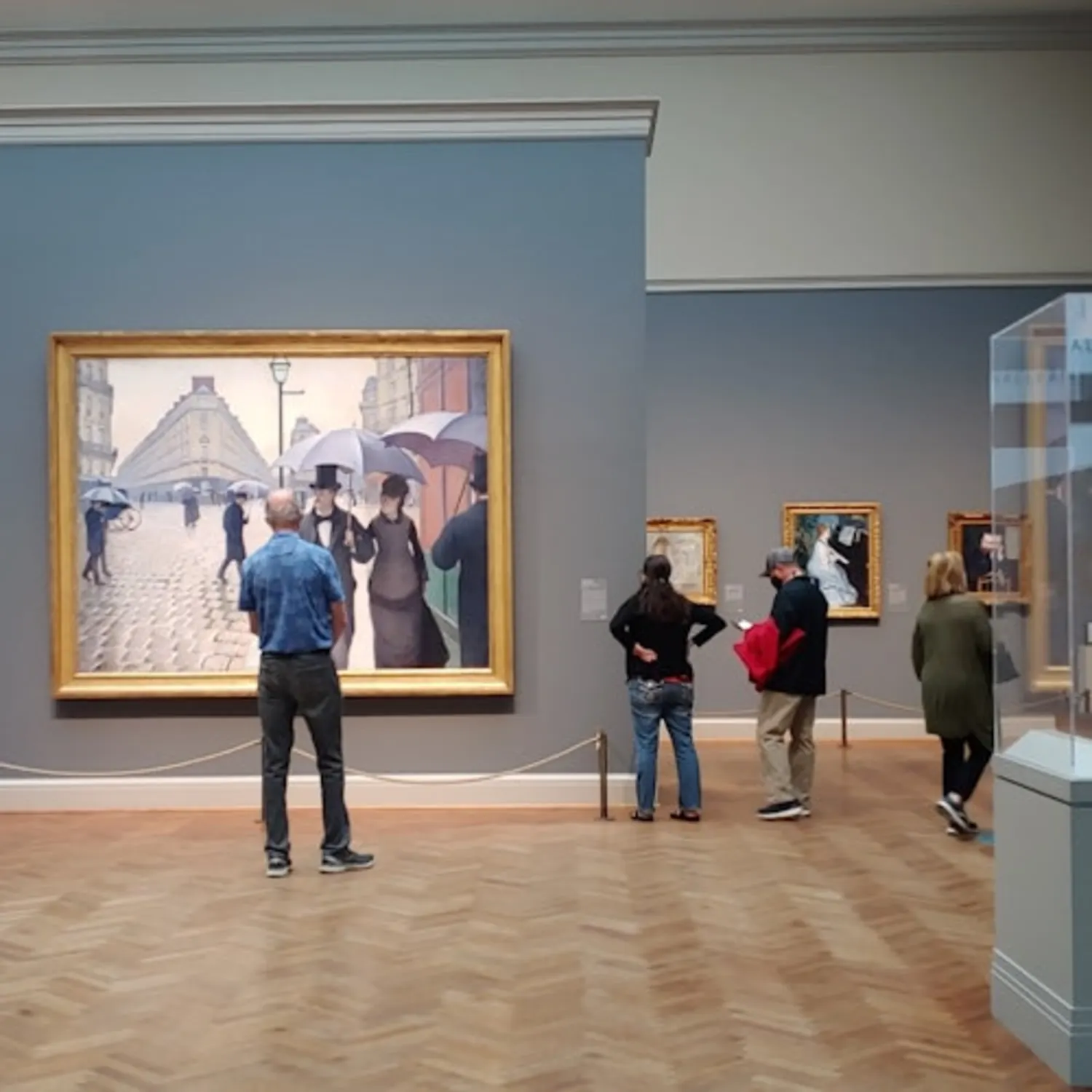
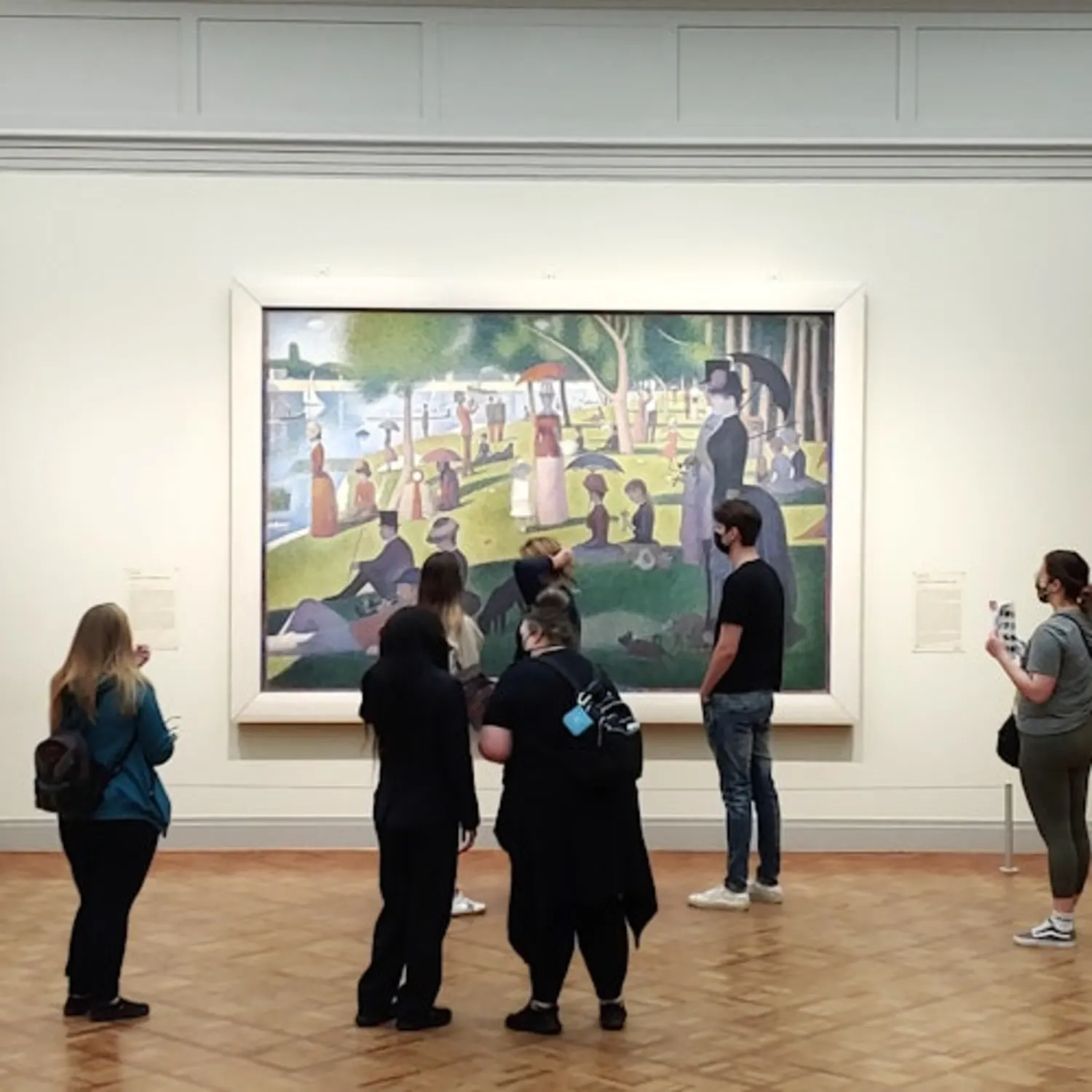
Gallery interior at the Art Institute of Chicago

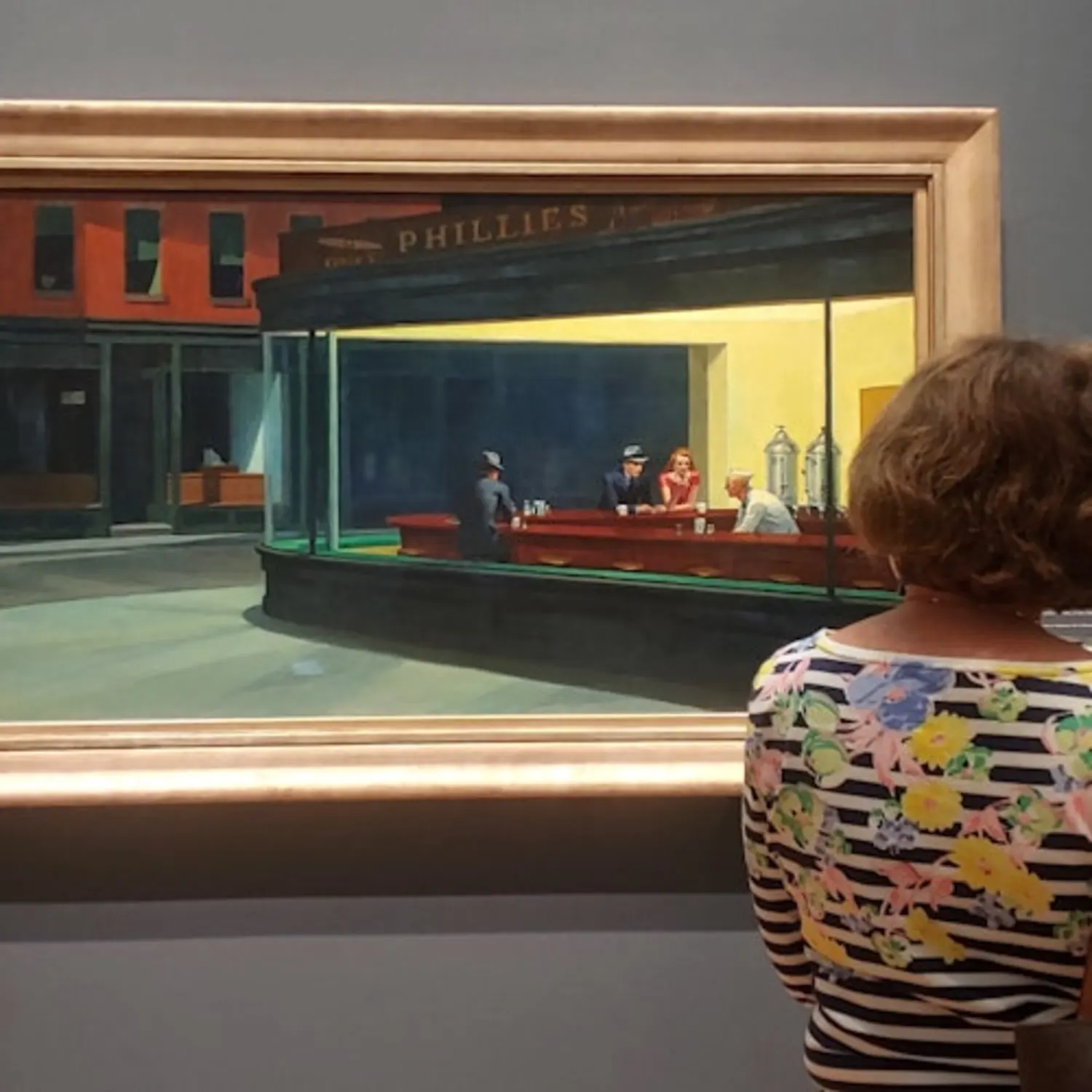
Stand back first. The diner sits on a corner, its long curved window flooded with fluorescent light while the street outside is dark and empty. Inside there are four figures: a couple at the far end of the counter, a server behind the counter, and a man alone on a stool with his back to you. Hopper used his wife, Jo, as the model for the red-haired woman and based the solitary man on himself.

Then look for what is missing. There is no door: you cannot see how anyone would get into the diner, which keeps you, the viewer, locked outside. Above the window, a sign advertises Phillies cigars, a cheap brand of the day, a clue that this is an ordinary late-night counter rather than a smart restaurant. Hopper recalled that, as he put it, "unconsciously, probably, I was painting the loneliness of a large city."

The diner that never existed

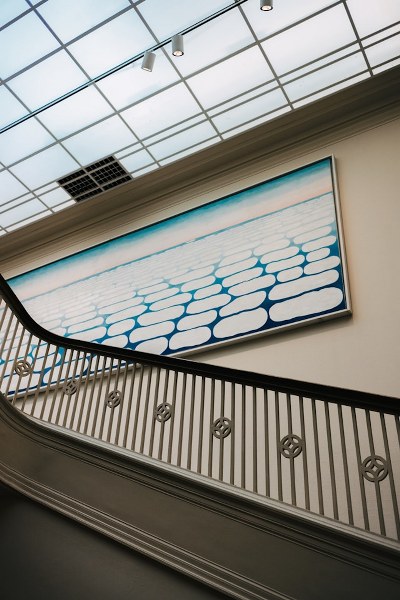
Interior steps at the Art Institute of Chicago

Hopper said the picture was suggested by a restaurant on Greenwich Avenue where two streets meet, in the New York neighbourhood where he lived. He made sketches on the streets and combined them in his studio, so the scene is not a record of one real place.

For years, Mulry Square in Greenwich Village was named as the site of the diner. Research by the writer Jeremiah Moss showed that a gas station stood on that lot from the 1930s to the 1970s, so it cannot have been the model. The exact diner has never been confirmed, which only adds to the painting's mystery.

Night Hawks: the story behind the title
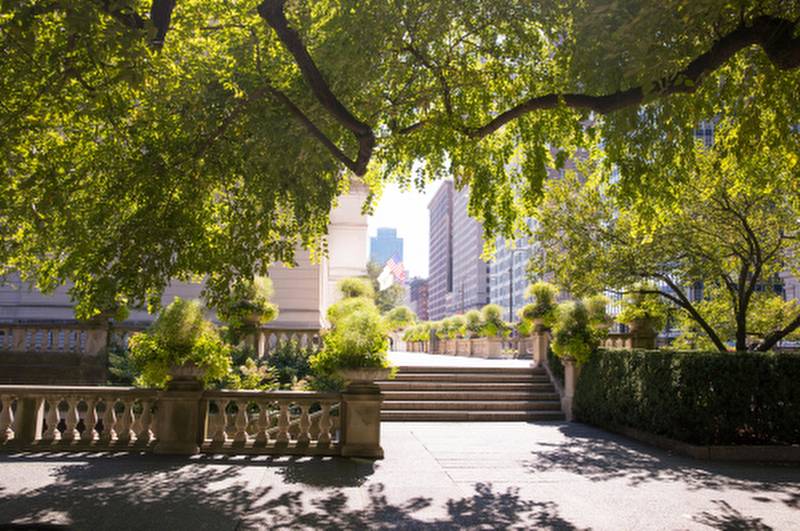
The Art Institute of Chicago

Hopper's journal shows the title he intended: Night Hawks, as two words. In a January 1942 letter to his sister, Jo Hopper wrote that Night Hawks would be a fine name for the picture, and her notes suggest it may refer to the beak-like nose of the man sitting at the counter with the woman.

The timing matters too. Hopper painted it in the weeks after the United States entered the Second World War, and some readings link the dark, empty street to the blackouts of those first months of war. The painting has been shown far from Chicago, at the 1950 Hopper retrospective at the Whitney Museum, the 1952 Venice Biennale and Tate Modern in 2004, but it always comes home to Gallery 262.

Nighthawks in popular culture

Director Ridley Scott linked the look of Blade Runner to the painting.

Gottfried Helnwein's Boulevard of Broken Dreams (1984) replaces the customers with Humphrey Bogart, Marilyn Monroe, James Dean and Elvis Presley.

Tom Waits named his 1975 album Nighthawks at the Diner after the image.

Red Grooms painted Nighthawks Revisited in 1980, and Banksy made his own version in 2005.

The film Pennies from Heaven (1981) recreated the diner as a full set.

Joyce Carol Oates wrote a poem titled after the painting, one of several poems it has inspired.

Seeing Nighthawks on your visit

Nighthawks hangs in Gallery 262 and is on view as part of the museum's collection.

Grant Wood's American Gothic (1930) is right next door in Gallery 263, so you can see both icons in a few minutes.

The painting is one of the most visited works in the museum, so expect people in front of it; step back and wait for a gap rather than viewing it from the side.

The museum is closed on Tuesdays and stays open later on Thursdays; check the time slots shown for your date when you book.

Both ticket options on this page, the Fast Pass and the skip-the-line semi-private tour, get you into the galleries where Nighthawks hangs.

Plan the rest of your Art Institute visit

Nighthawks is a short walk from many other highlights. Read our guide to planning an Art Institute visit, compare other museums in Chicago, or book on the Art Institute of Chicago ticket page.

Nighthawks at the Art Institute: FAQs

Where is Nighthawks in the Art Institute of Chicago?

Nighthawks is on view in Gallery 262. Grant Wood's American Gothic hangs next door in Gallery 263.

Is Nighthawks the original painting?

Yes. The Art Institute owns Edward Hopper's original oil on canvas, bought in May 1942, just months after Hopper finished it.

How big is Nighthawks?

The canvas measures 84.1 by 152.4 cm, or 33 1/8 by 60 inches, so it is wider and more cinematic than many people expect.

When was Nighthawks painted?

Hopper's journal records that he finished the painting on 21 January 1942.

How much did the Art Institute pay for Nighthawks?

The museum bought it on 13 May 1942 for $3,000, after director Daniel Catton Rich saw it at the Rehn gallery in New York.

Was the Nighthawks diner a real place?

Hopper said the scene was suggested by a restaurant on Greenwich Avenue in New York, but he combined sketches in his studio. The exact diner has never been confirmed, and Mulry Square has been ruled out.

Who are the people in Nighthawks?

There are four figures: a couple, a server and a man sitting alone. Hopper's wife, Jo, posed for the woman, and Hopper based the solitary man on himself.

Why is there no door in Nighthawks?

Hopper left out any visible entrance to the diner. The effect is that the viewer is shut out of the scene, looking in through the glass.

What does the sign on the diner say?

The sign above the window advertises Phillies cigars, a cheap brand of the time, which tells you this is an everyday diner rather than an upscale restaurant.

Is American Gothic near Nighthawks?

Yes. American Gothic, painted by Grant Wood in 1930, is in Gallery 263, right next to Nighthawks in Gallery 262.

Does a ticket include Nighthawks?

Nighthawks is part of the museum's collection on view, so museum entry covers it. Check what's included and the time slots shown for your date when you book.

About this guide

Sources: Art Institute of Chicago, Nighthawks collection record; Art Institute of Chicago, Acquiring Nighthawks; Art Institute of Chicago, American Gothic collection record; Encyclopaedia Britannica, Nighthawks; Wikipedia, Nighthawks (Hopper).

This website offers official tickets for the venues listed, sold by Tourism Tickets. Please note, however, that it is not the official website of any of these venues.

The images and videos on this website may contain visual elements that have been created or enhanced using AI technology. They are provided for illustrative purposes only.